
He maintained that the laws were for their benefit and then apologised to people of the country, adding that the government could not convince a section of farmers despite its clear heart and clean conscience.

A closer look at the data reveals that a lot of the items are not part of this calculation. The notable ones include buffalo meat, marine exports, raw cotton, and plantation crops such as tea, coffee, rubber, etc.

A clear message was that the ongoing seven-decade-old model of agriculture, based on extensive reliance on subsidy by the government at every stage, was not going to work, said NITI Aayog vice-chairman Rajiv Kumar.

'While the country has been hit hard from a strong second wave of Covid, we believe the markets are willing to look through that.'

'BJP leaders are trying to save their lives in Punjab.'

Merrill Lynch warned that oil prices could fall as low as $25 a barrel next year if the recession affecting the US, Europe and Japan extended to China, the main driver of demand growth in commodity markets in recent years.

The government's predicament is a result of its own doing: That of not ensuring adequate buy-in by the stakeholders before passage of the laws, notes Vivek Gumaste.

Among the lot, Rallis India, Escorts, Jubilant Life Sciences, and Crisil added half of the total gains made in the ace stock-picker's portfolio.
The government on Monday said it has no plans to ban more farm commodities from futures market and hoped that suspension of trading in soya oil, chana, potato and rubber would not be extended beyond four months.

Omkeshwar Singh, head, Rank MF, a mutual fund investment platform, answers your queries.

Budget has already bombed at the box office and passing it without a revisit will be a mockery of the exercise though any modification may be short lived and perfunctory, observes V Ranganathan.

The benchmark indices have rallied 28 per cent this year, while the broader market has outperformed

Reversal is because of strengthening rupee, subdued demand, and lack of reasons for bulls to continue positions and speculation of reduction in import duty.

Dhananjay Sinha, co-head, institutional research, Emkay Global Financial Services tells Business Standard in an interview that even as global commodity prices have softened in response to expectations of weaker global demand, the stronger performance of equities is seemingly pre-empting stronger growth.

"The question of entering into Delhi is a law and order matter and will be determined by the police," the bench said.

Any market correction, analysts say, would be an attractive entry point for risky assets, which should do well over the medium-to-long term.
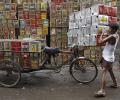
High inflation print is the price that the Reserve Bank of India (RBI) will have to pay to nurse a fragile growth back, say economists. Wholesale Price Index-based inflation rose to a record high of 12.94 per cent in May, aided by low base effect, but also because of higher fuel and commodity prices. Retail inflation, too, surprised by rising to 6.30 per cent, while the core inflation, which is the non-food and non-fuel component, rose to an 83-month high of 6.55 per cent. These numbers are much above RBI's upper limit of 6 per cent inflation target, but there is very little that the RBI can do at this moment.

The government has also allowed individuals from the private sector to apply for the post

According to the ministry's statement, Tomar thanked the BKU (Kisan) leaders for coming out in support of the Farm Acts and said these laws have been welcomed in various states across the country.
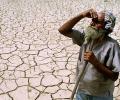
The arrival of the June-September rains has been delayed.

The bench issued notice to the Centre and said it would hear the matter on Friday.

According to industry figures, the pre-Covid demand for liquid medical oxygen (LMO) before the pandemic was 700 tonnes per day across the country. Now, with the second wave, the demand has gone up more than seven times, reports Jyoti Mukul.

The bond market is not in a mood to reason with the Reserve Bank of India (RBI) on keeping yields low. The 10-year bond yields continued to rise for the fourth straight session to close at 6.202 per cent from its previous close of 6.135 per cent. The yield was at 6 per cent a week ago. The RBI wants the yields to remain at 6 per cent, but bond dealers say the central bank will have to step up its bond-buying programme.
Multi-crore ponzi schemes are mushrooming in West Bengal and government is not taking any action despite they are out in the open.

In his first two years, Tyagi, a Himachal Pradesh cadre IAS officer, has implemented challenging stock market reforms and taken action against high-profile corporate entities.
The term of the committee that the Manmohan Singh government has set up to study the impact of futures trading in agricultural commodities on price rise is being extended.

The GST rates for all but six items were finalised at the first day of the two-day meeting of the GST Council, headed by Union Finance Minister Arun Jaitley and comprising state representatives.

"Let me take a risk and say Chief Justice of India wants them (protesting farmers) to go back to their homes. Try to persuade them," the Chief Justice, who headed a three-judge bench said. "People are committing suicide. People are calling names. People are suffering in cold and pandemic situations. If not cold, farmers are in danger of COVID," the bench, also comprising Justices A S Bopanna and V Ramasubramanian, told lawyers appearing for the farmers union and asked them to persuade the protestors to go home.
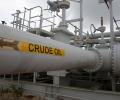
There is positive correlation between crude oil prices and Indian equities and investors can expect more upside after the recent rally in Brent crude price.
The Community PCs' will keep farmers informed about the prices of various commodities in wholesale markets.
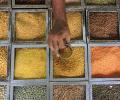
Prices are likely to rise further as demand grows in coming months due to festivals

NSEL, has up to Rs 500 crore (Rs 5 billion) daily turnover in e-golds.

Besides growing tech and digital enhancements, the firms are ramping up the hiring of more delivery partners and reinforcing existing Covid protocols.

No reason was cited for rescheduling of the meeting.

Prime Minister Manmohan Singh's government is in a race against the clock to pass reforms economists say are needed to breathe life into Asia's third-largest economy.

The markets have been unable to sustain at higher levels as a rise in bond yields globally, especially in the US have dented sentiment. Surging commodity prices, especially crude oil that have now hit $70 a barrel (Brent) coupled with inflation woes and fear of sporadic lockdown across major economic hubs back home as Covid cases rise have chased the bulls away. In the short-term, analysts expect the markets to remain volatile as they react to news flow - both from overseas and developments back home. Investors, they say, need to keep a tab on how the US treasury yields move, which in turn will have a ripple effect on how big money moves across developed (DMs) and emerging markets (EMs), including India.

The studies found that sectors with the highest unaccounted income included real estate, mining, pharmaceuticals, pan masala, gutkka and tobacco, bullion and commodity markets, film industry, educational institutes and professionals.

The Centre will utilise huge network of post offices across the country to sell subsidised pulses, mainly tur, urad and chana, to ensure availability in the ongoing festival season.

Attractively low prices, rising demand and a favourable ratio to gold point to better days ahead for the white metal.

Market participants are hoping for a few tweaks on the taxation front which will encourage consumers and businesses to spend.
